What to Eat on GLP-1: 5 Plant Powders for Protein, Plant Variety & Everyday Nutrition
For many people taking a GLP-1–based medication, one of the first noticeable changes is simple: eating less starts to feel more natural.
The appetite signal that once showed up reliably — the pull toward a meal, a snack, or seconds — may become quieter. Some people find that they are simply less interested in food. Others feel full sooner and stay full longer.
And for adults using these medications as part of a weight-management plan, eating smaller portions may also be intentional. Weight loss is often the goal.
That creates a nutritional question that deserves just as much attention as the number on the scale:
If you're intentionally eating less, what deserves space in the food you are still eating?
Eating less doesn't make protein, micronutrients, or dietary variety stop mattering. In fact, when total food intake falls, there may be fewer opportunities across the day to obtain them.
That changes the value of the food that remains.
This article is not about finding a “natural GLP-1,” making medication work harder, or turning plant powders into weight-loss drugs.
It is about something much more practical: five plant-derived food ingredients that can help bring protein and plant variety into a smaller, more intentional way of eating.
What Changes About Eating on GLP-1?
“GLP-1” is often used as shorthand for a broader group of medications used in diabetes and weight management.
Some, including semaglutide and liraglutide, are GLP-1 receptor agonists. Tirzepatide acts on both GIP and GLP-1 receptors.
Although their pharmacology is not identical, these medications can affect appetite, satiety and how food moves through the digestive system. For many people, the practical result is smaller portions, earlier fullness and less interest in eating than before.
For adults using these medications for weight management, reduced appetite and calorie intake are part of how treatment can support weight reduction.
But eating less and eating well are not the same thing.
When food intake decreases substantially, there are simply fewer meals and smaller portions available to provide the nutrients that would normally be spread across a larger diet.
Three things become especially worth thinking about.
Protein. If total intake falls, protein can fall with it. During weight loss, maintaining an appropriate protein intake — together with physical activity — is commonly emphasized as part of preserving lean tissue.
Plant variety. A smaller diet can easily become a narrower diet. Someone who is not very hungry may repeatedly return to the same few foods because they are familiar and easy.
Practical food formats. Nutrition advice only works if it fits the amount of food someone actually wants to eat. Telling someone with a reduced appetite to simply prepare larger, more elaborate meals misses the point.
These three ideas are where plant powders can become useful.
When Portions Get Smaller, Protein Deserves More Attention
Weight loss does not come exclusively from body fat. Loss of body weight can include both fat and lean tissue.
That is one reason nutrition professionals commonly emphasize adequate protein and resistance or strength-based activity during weight reduction.
Protein powder by itself does not prevent muscle loss, and a single food cannot replace an overall eating pattern. But if food intake is lower and protein still matters, it makes sense to be deliberate about where that protein comes from.
For adults who prefer plant-based proteins — or simply want more than one type of protein source — powdered plant proteins offer one food format that can fit into relatively small eating occasions.
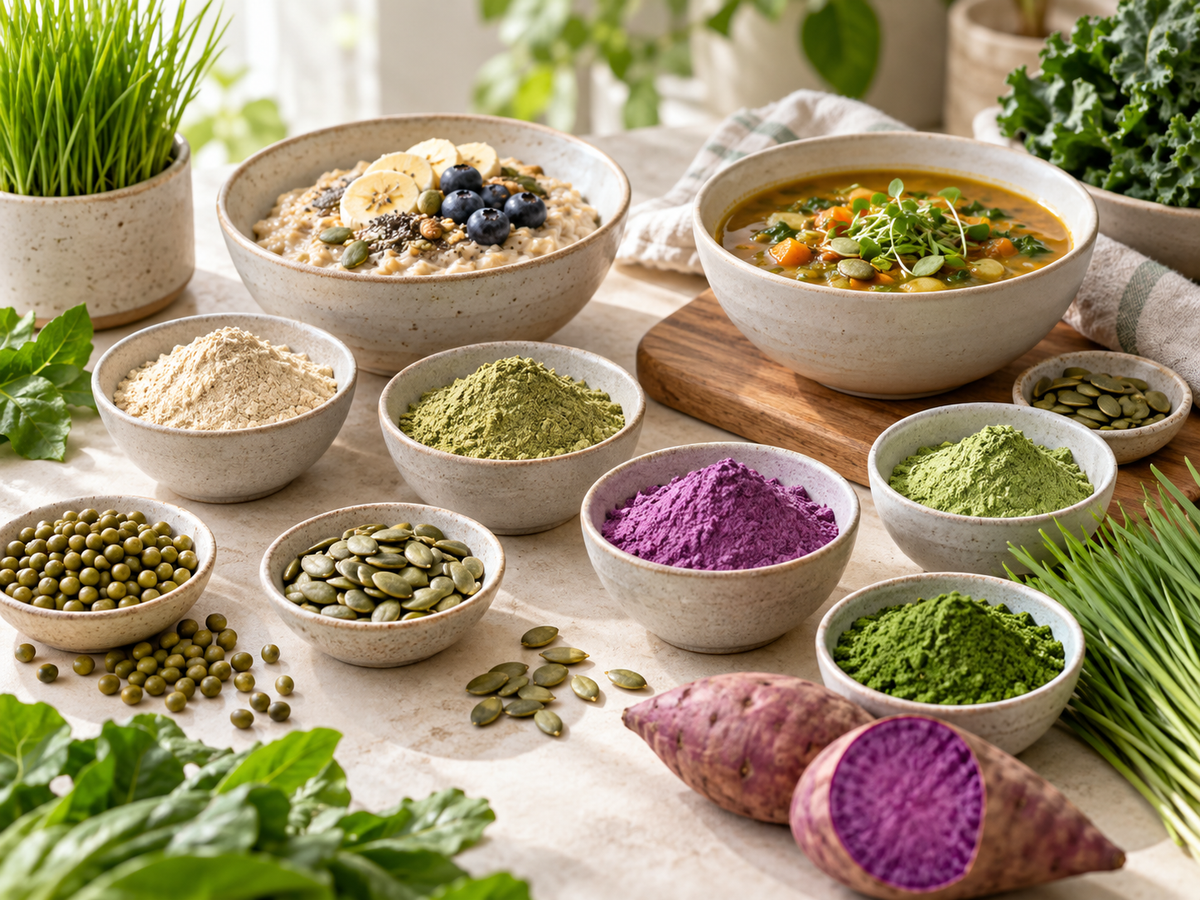
1. Unleash’d Organic Mung Bean Protein Powder
Mung beans have a long history as a food crop throughout Asia and are naturally associated with plant protein.
Mung bean protein powder takes that familiar plant source and provides it in a protein-focused food format.
That is what makes it relevant to someone eating less on GLP-1.
Instead of requiring a large protein-centered meal every time, mung bean protein can be incorporated into foods that are already part of the day — for example, a smaller portion of oatmeal, yogurt, or another preparation where a plant protein ingredient fits.
The point is not that mung bean protein somehow interacts with GLP-1 medication.
The point is that when portions become smaller, protein has to compete for less dietary space. A plant protein ingredient can make that space easier to use intentionally.
For people who prefer plant-based eating, it also provides an alternative to relying entirely on dairy-, egg- or meat-based protein sources.
Unleash’d Organic Mung Bean Protein Powder
For a deeper look at mung bean protein and plant-based protein intake, see:
Existing Mung Bean Protein / Vegetarian Protein Article
2. Unleash’d Organic Pumpkin Seed Protein Powder
Not everyone wants the same protein source every day.
Pumpkin Seed Protein provides another plant-derived protein option with a different botanical origin and flavor profile from mung bean protein.
That matters because long-term weight management is not a one-meal project. If smaller portions become part of everyday life for months or longer, having different foods and flavors available can make the overall eating pattern less repetitive.
Pumpkin seed protein has a more earthy, seed-forward character, making it suited to different food combinations than mung bean protein.
Its role in this article is straightforward:
It gives someone who is prioritizing protein another plant-based option rather than asking one ingredient to do everything.
Any specific protein, fiber or mineral claims should come from the finished product's Nutrition Facts rather than from the nutritional composition of whole pumpkin seeds.
Unleash’d Organic Pumpkin Seed Protein Powder
Weight-Loss Nutrition Isn't Only About Protein
Protein deserves attention during weight loss.
But a diet that gradually becomes nothing more than protein foods is not necessarily a varied diet.
Reduced appetite can make dietary repetition surprisingly easy.
When you're not very hungry, you may be less motivated to prepare multiple vegetables, fruits and other plant foods. You find a few foods that feel manageable and keep returning to them.
Over time, that can mean fewer different plant foods and a narrower range of naturally occurring plant compounds.
Plant powders cannot recreate the full experience or nutrition of a varied whole-food diet.
But they can provide another way to introduce different plant ingredients without requiring a large additional meal.
3. Unleash’d Organic Purple Sweet Potato Powder
Purple Sweet Potato Powder plays a completely different role from the two protein powders above.
It is not here primarily as a protein source.
Its role is plant variety.
Purple sweet potato is a root vegetable with a different botanical identity and composition from mung beans or pumpkin seeds.
Purple-fleshed sweet potatoes naturally contain anthocyanins, the family of plant pigments responsible for many red, purple and blue colors in plant foods. Purple sweet potatoes are particularly associated with cyanidin- and peonidin-related anthocyanin compounds.
That doesn't make Purple Sweet Potato Powder a weight-loss ingredient, nor does it mean it enhances GLP-1 medication.
Its value here is simpler.
If someone's diet has become smaller and more repetitive, purple sweet potato provides another recognizable plant source that can be incorporated into suitable foods without preparing an entire fresh root.
It can fit into foods such as oatmeal, yogurt or other preparations where its mild sweet-potato character works naturally.
Weight-loss nutrition should not become protein-only nutrition.
Purple sweet potato is one way to keep a different kind of plant food in the picture.
Unleash’d Organic Purple Sweet Potato Powder
To learn more about purple sweet potato and its naturally occurring anthocyanins:
Existing Purple Sweet Potato / Anthocyanins Article
What About Green Plant Foods?
Wheatgrass and Barley Grass occupy another role.
They are not replacements for the protein powders above, and there is no reason to force them into that category.
Their value in this context is as additional green plant ingredients that come from yet another part of the plant-food spectrum.
For someone eating fewer and smaller meals, that can be useful simply because plant variety becomes harder to maintain when fewer foods are being eaten overall.
4. Unleash’d Organic Wheatgrass Powder
Wheatgrass comes from the young growth of the wheat plant, Triticum aestivum.
As a powdered food ingredient, Wheatgrass Powder provides a distinctly green, plant-derived option that can be incorporated into foods or drinks where its vegetal flavor makes sense.
Its flavor is noticeable rather than neutral, so it works best when paired with foods that naturally accommodate a green, grassy character.
Wheatgrass naturally contains chlorophyll and other compounds as part of the plant itself. However, specific nutrient levels in a finished powder should be based on that product's actual Nutrition Facts and verified composition rather than generic data for fresh wheatgrass.
In a GLP-1 eating pattern, Wheatgrass Powder's role is not to suppress appetite or accelerate weight loss.
It is simply one more plant ingredient that can fit into a diet that may otherwise be getting smaller and less varied.
Unleash’d Organic Wheatgrass Powder
5. Unleash’d Organic Barley Grass Powder
Barley Grass comes from Hordeum vulgare.
Barley and wheat are different plant species, although both belong to the grass family, Poaceae.
That makes Barley Grass another green plant source with its own botanical identity rather than simply “more wheatgrass.”
Like Wheatgrass Powder, its role here is not protein replacement and not GLP-1 enhancement.
It provides another plant-derived food ingredient for someone who wants to keep some variety among the foods that remain in a smaller eating pattern.
Its earthy, green flavor means it is best used in foods or beverages where that botanical character is welcome.
As with Wheatgrass Powder, any specific statements about fiber, minerals or other nutrients should come from the Nutrition Facts and verified data for the finished Unleash’d Organic product.
Unleash’d Organic Barley Grass Powder
More Fiber Isn't Automatically Better on GLP-1
A lot of GLP-1 nutrition advice gets reduced to a simple formula:
High protein + high fiber.
There is a reason both nutrients receive attention.
Protein is important within a well-constructed weight-loss eating pattern, and dietary fiber is an important part of overall nutrition and digestive regularity.
But “more fiber” is not automatically the right answer at every moment.
Some adults using GLP-1–based medications experience nausea, bloating, constipation, persistent fullness, reflux or other gastrointestinal discomfort, particularly during treatment initiation or dose changes.
For someone already experiencing significant fullness or bloating, suddenly increasing fiber substantially may make those symptoms harder to tolerate.
More fiber isn't automatically better.
What you tolerate matters.
That is also why this article is not recommending that someone dump all five powders into one giant “GLP-1 shake.”
For some people, a blended drink may fit perfectly well.
For others, especially when appetite is low or the stomach already feels full, it may be the last thing they want.
A more practical approach is to work with the foods and amounts that already feel manageable.
If gastrointestinal symptoms become severe, persistent or difficult to manage, that is a conversation for the prescribing clinician rather than something a food powder is intended to solve. Cleveland Clinic
What These 5 Plant Powders Can — and Can't — Do
These five products are foods.
That sounds obvious, but it is important to keep the distinction clear.
They can provide plant protein or introduce additional plant-derived ingredients into foods that fit smaller eating patterns.
Mung Bean Protein and Pumpkin Seed Protein offer two plant-protein options.
Purple Sweet Potato, Wheatgrass and Barley Grass bring different plant sources into the diet.
They can also offer convenience when appetite is lower and elaborate food preparation is less appealing.
What they cannot do is equally straightforward.
They do not increase the effectiveness of GLP-1 medication.
They do not replace GLP-1 treatment.
They do not guarantee faster or greater weight loss.
And they are not treatments for nausea, constipation, reflux or other medication-related symptoms.
Their value is simpler than that:
If GLP-1 use is changing how much you eat, these foods can help you be more intentional about what remains.
Eating Smaller Portions? Add to What You're Already Eating
Plant powders do not need to become the centerpiece of a new meal plan.
A more realistic approach is to add them to foods that are already appealing and comfortable to eat.
Smaller portions of oatmeal
A smaller bowl of oatmeal can provide a food base for Mung Bean Protein, Pumpkin Seed Protein or Purple Sweet Potato Powder, depending on the flavor and texture you prefer.
The idea is not to turn oatmeal into a giant “nutrition bowl.” It is simply to use an existing food occasion more intentionally.
Yogurt or other soft foods
For people who already eat yogurt or similar soft foods, an appropriate plant powder can sometimes be mixed into the portion they already want to eat.
Purple Sweet Potato Powder or one of the protein powders may fit this type of preparation depending on personal taste.
Soups and savory foods
Green plant powders may fit more naturally into savory foods, blended soups, sauces or other preparations where a vegetal flavor belongs.
Protein powders may also work in selected savory preparations depending on the recipe.
Existing small meals
The underlying principle matters more than any specific recipe.
If someone is already eating a small breakfast, grain-based meal, soup or other simple food, a suitable plant ingredient may be added there rather than creating another full eating occasion.
Smoothies or blended drinks — if you actually want one
Smoothies and protein drinks are still perfectly valid formats for people who enjoy them.
They simply do not need to be the default.
If a smaller blended drink feels appealing, plant protein and another plant ingredient can fit naturally.
If a large smoothie sounds unappealing when you're already feeling full, there is no reason to force one simply because you use plant powders.
The goal is not to build your diet around powders.
The goal is to make the foods you are already choosing work better within the amount you actually want to eat.
The Goal Is Weight Loss. The Goal Isn't to Lose Nutrition Along the Way.
For many adults using GLP-1–based medications as part of a weight-management plan, weight loss is exactly the goal.
There is no need to pretend otherwise.
But successful weight management should not be reduced to one question:
How little can I eat?
A better question is:
If I'm eating less, how can I be more intentional about what I do eat?
Protein still matters.
Plant foods still matter.
Dietary variety still matters.
And those things can become easier to overlook when appetite and portions get smaller.
The five plant-derived food formats in this article each fill a different role:
Mung Bean Protein Powder — a plant-protein option that can fit smaller eating occasions.
Pumpkin Seed Protein Powder — another plant-protein source with a different botanical and flavor profile.
Purple Sweet Potato Powder — a root-vegetable ingredient that adds another type of plant food to the diet.
Wheatgrass Powder — a green plant ingredient for additional botanical variety.
Barley Grass Powder — another green plant source from a different grass species.
None of them makes GLP-1 medication work better.
They don't need to.
Their role is in the part of weight management that food still controls: the quality, variety and nutritional intentionality of what you choose to eat.


Leave a comment
This site is protected by hCaptcha and the hCaptcha Privacy Policy and Terms of Service apply.