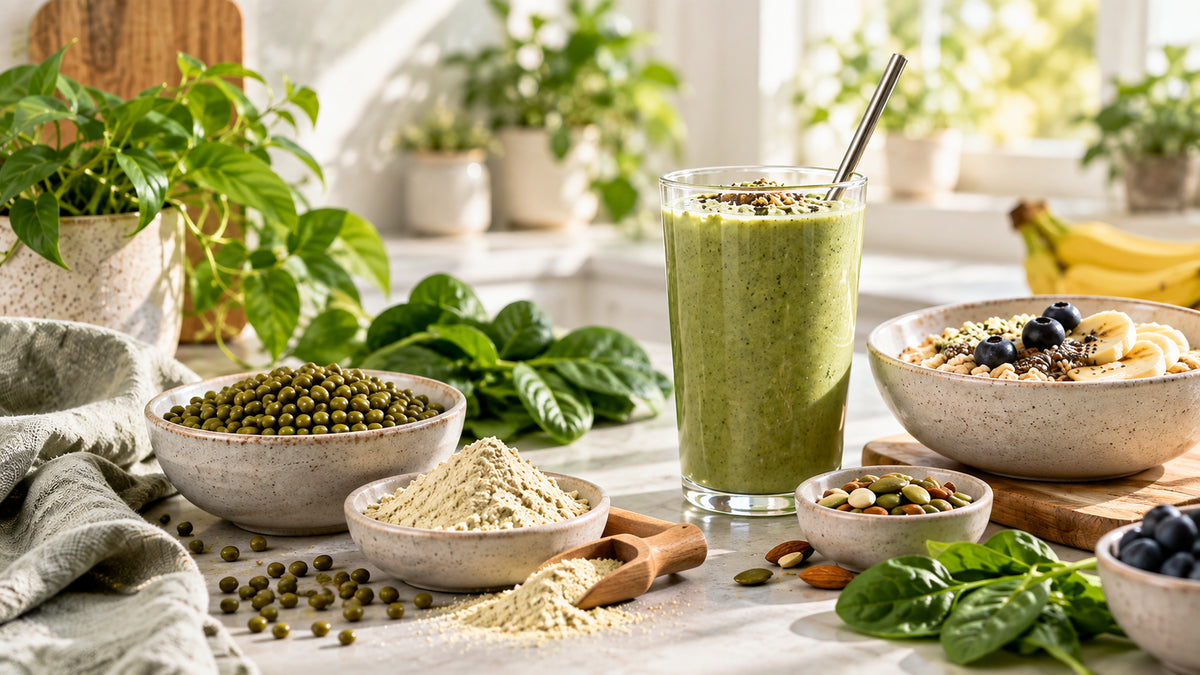
Vegetarians can get protein from a wide range of foods: lentils, chickpeas, beans, tofu, tempeh, nuts, seeds, whole grains, and—where included—eggs and dairy. A varied vegetarian diet can provide sufficient protein without relying on one particular food.
But not every protein source plays the same role in a meal. Whole legumes provide protein alongside fiber, carbohydrates, and other naturally occurring nutrients. Protein-focused plant ingredients offer a different option for people who want to incorporate additional protein into foods they already eat.
Mung bean protein powder is one such ingredient. Derived from mung beans, it offers a concentrated source of plant protein that may be of interest to vegetarians, vegans, and anyone exploring a more plant-based way of eating.
So where does it fit among familiar vegetarian foods, and what makes it different from simply eating mung beans?
Where Can Vegetarians Get Protein?
Protein is not exclusive to animal-derived foods. Plant-based diets can draw on several food groups, each contributing protein as part of a broader nutritional profile.
Beans and lentils are an established starting point. Chickpeas, black beans, kidney beans, lentils, and other legumes contain protein together with fiber, carbohydrates, and naturally occurring micronutrients. They work as the foundation of a meal or as an addition to grains, vegetables, and other foods.
Soy foods, including tofu, tempeh, and edamame, are another important source. Their protein content varies by product and preparation. Firm tofu, for example, may have a different nutritional profile from silken tofu, so it is worth looking at the actual food and portion rather than treating all soy products as identical.
Nuts and seeds contribute protein alongside naturally occurring fats and other nutrients. Pumpkin seeds, hemp seeds, almonds, and nut butters can complement meals or snacks, although their protein contribution depends on how much is eaten.
Whole grains also play a supporting role. Oats, quinoa, and other grains contribute to total protein intake, even when they are not the primary protein source in a meal.
For lacto-ovo vegetarians, eggs and dairy products provide additional options. Vegans can obtain protein entirely from plant-derived foods.
The key is variety. Different foods contribute different amounts of protein and other nutrients, and no single ingredient needs to carry the entire nutritional responsibility of a vegetarian diet.
Alongside these familiar foods, there is another category worth understanding: protein-focused plant ingredients, including mung bean protein powder.
What Is Mung Bean Protein Powder?
Mung beans (Vigna radiata) are legumes consumed in many parts of the world, particularly across South and Southeast Asia. Whole mung beans naturally contain protein, starch, fiber, and other components of the bean.
Mung bean protein powder starts with the same plant but represents a different ingredient format. Rather than being ordinary whole mung beans ground into a powder, it is produced with protein making up a more prominent proportion of the finished ingredient.
Supplier-provided nutritional information for Unleash’d Organic's mung bean protein ingredient estimates approximately 80% protein by weight.
That figure helps explain why mung bean protein powder is relevant to someone looking for a plant protein source: protein makes up a substantial proportion of the ingredient, rather than being one component within the broader composition of the whole bean.
The distinction does not make whole mung beans less valuable. Whole legumes contribute a wider combination of food components, while a protein-focused ingredient serves a different purpose.
Whole Mung Bean Powder vs. Mung Bean Protein Powder
Although both originate from mung beans, the two powders should not be treated as nutritionally interchangeable.
| Feature | Whole Mung Bean Powder | Mung Bean Protein Powder |
|---|---|---|
| Source plant | Mung bean | Mung bean |
| Ingredient format | Powder representing more of the whole bean | Protein-focused ingredient |
| Protein composition | Reflects the broader bean composition | Protein makes up a larger proportion |
| Other bean components | Includes the bean's naturally occurring starch, fiber, and other components | Composition differs from whole-bean powder |
| Role in food | Adds a broader mung bean ingredient | Adds a more concentrated plant protein ingredient |
| What to check | Overall Nutrition Facts and ingredient description | Protein per serving and finished-product Nutrition Facts |
For a more detailed explanation of ingredient identity and processing, read our What Is Mung Bean Protein? How It’s Made & How It Differs from Whole Mung Bean Powder.
Why Might Vegetarians Choose Mung Bean Protein Powder?
A well-planned vegetarian diet can provide sufficient protein through ordinary foods. Mung bean protein powder does not change that.
Its value is that it offers another way to include plant protein within an existing eating pattern.
Consider someone who regularly eats oatmeal with fruit for breakfast. That meal already contributes nutrients, including some protein. If the person wants to incorporate an additional plant protein ingredient, mung bean protein powder can be added without replacing the foods that make up the meal.
The same idea applies to other familiar foods. A smoothie, pancake batter, or suitable savory preparation can include a protein-focused ingredient alongside its usual components.
This is different from simply choosing a larger serving of whole beans. Both approaches can contribute protein, but the foods bring different combinations of nutrients and behave differently in recipes.
An Additional Legume-Derived Protein Source
Soy and pea proteins are familiar ingredients in the plant protein category. Mung bean protein introduces another legume-derived option.
Some consumers prefer to use several different plant ingredients rather than relying on one source for every meal. Others may be interested in mung beans because they are already familiar with the ingredient in traditional foods.
These are reasonable reasons to explore a different protein source, but they do not establish that mung bean protein is superior to soy, pea, or other proteins.
The nutritional value of any protein ingredient depends on several factors, including its protein content, amino acid composition, serving size, and the rest of the diet.
For someone following a vegetarian or vegan eating pattern, mung bean protein powder is best understood as an additional plant protein option within a varied diet.
How Much Protein Does Mung Bean Protein Powder Provide?
Protein concentration and protein per serving are related, but they describe different things.
A powder's protein percentage describes how much of its weight consists of protein. The Nutrition Facts panel tells you how much protein a defined serving of the finished product provides.
When comparing plant protein powders, check three things:
- Protein per serving: The amount of protein listed for the manufacturer's defined portion.
- Serving size: The amount of powder that corresponds to that protein figure.
- Ingredient list: Whether the product contains one protein ingredient or a combination of ingredients, flavors, sweeteners, or other additions.
Two powders made from the same plant can have different nutritional compositions. The finished product label is therefore more useful for comparing actual servings than a general statement about the source plant.
To see the specific product information, visit Unleash’d Organic Mung Bean Protein Powder.
For someone evaluating vegetarian protein sources, the practical question is not simply whether a food contains protein. It is how much the food contributes in the portion they intend to use, and how that fits alongside the rest of their diet.
What About Protein Quality and Essential Amino Acids?
Protein quantity is important, but it is not the only consideration when comparing protein sources.
Dietary proteins are made up of amino acids. Nine are considered essential because the body cannot produce them in sufficient amounts and must obtain them from food.
Different protein-containing foods have different amino acid profiles. The presence of essential amino acids does not necessarily mean that two ingredients provide them in the same proportions or have identical protein quality.
This is one reason a varied diet matters.
Legumes, grains, nuts, seeds, soy foods, and other protein-containing foods can contribute different amino acids across the day. Vegetarians do not need to rely on a single plant food or carefully pair specific proteins at every meal to obtain essential amino acids.
When evaluating an individual protein powder, however, a high protein percentage alone does not establish its complete amino acid profile or digestibility.
Mung bean protein powder provides plant-derived protein, but claims about its precise amino acid composition or equivalence to another protein would require additional product-specific information.
The useful takeaway is straightforward: mung bean protein can be one part of a varied protein intake, rather than an ingredient expected to meet every nutritional need by itself.
How Can Mung Bean Protein Fit Into Everyday Meals?
One practical characteristic of mung bean protein powder is that it can be incorporated into foods people already prepare.
The powder format does not make it nutritionally necessary, but it creates options for including a protein-focused ingredient in everyday eating.
Smoothies: Blend the powder with fruit and a liquid base. The finished texture will depend on the amount used and the other ingredients.
Oatmeal and breakfast cereals: Stir or whisk the powder into a prepared cereal. Adjust the liquid as needed to achieve the desired consistency.
Pancakes and baked goods: Incorporate the powder into a suitable batter, usually as a partial substitution rather than replacing all the flour. Protein powder does not perform exactly like flour in baking.
Savory foods and homemade blends: Depending on the recipe, mung bean protein powder can also be incorporated into selected soups, food mixtures, or homemade snacks.
Like many plant-derived powders, it is more accurate to describe mung bean protein as dispersing through a mixture than dissolving completely like sugar.
The powder's flavor and texture may be noticeable depending on the recipe. Starting with an amount suited to the preparation and adjusting from there can help achieve the preferred result.
These uses support the ingredient's nutritional role. The reason to consider mung bean protein powder is the plant protein it contributes—not simply that it can be added to different recipes.
Choosing a Plant Protein Source That Fits Your Diet
There is no single protein source that every vegetarian needs to choose.
Whole legumes, tofu, tempeh, nuts, seeds, grains, and other vegetarian foods provide protein alongside different combinations of naturally occurring nutrients. Dietary variety helps these foods contribute in complementary ways.
Mung bean protein powder offers another option, particularly for someone interested in a protein-focused ingredient derived from a real plant.
Before choosing a product, consider its ingredient list, protein per serving, and how it fits into the meals you already enjoy.
A protein powder does not need to replace whole foods or become the foundation of a diet to have a useful role. It can simply be one ingredient among many.
To explore this ingredient alongside other plant-derived protein options, browse our Plant Protein Powders collection.
The Bottom Line
Vegetarians can obtain protein from a wide range of foods, including legumes, soy foods, nuts, seeds, whole grains, and—where included—eggs and dairy. A varied diet provides the foundation.
Mung bean protein powder adds another possibility: a protein-focused ingredient derived from mung beans. Its nutritional composition distinguishes it from ordinary whole mung bean powder, while its powdered format allows it to be incorporated into familiar foods.
For people exploring plant-based protein sources, it is an option worth understanding alongside the many other foods that can contribute to a balanced vegetarian diet.

Leave a comment
This site is protected by hCaptcha and the hCaptcha Privacy Policy and Terms of Service apply.