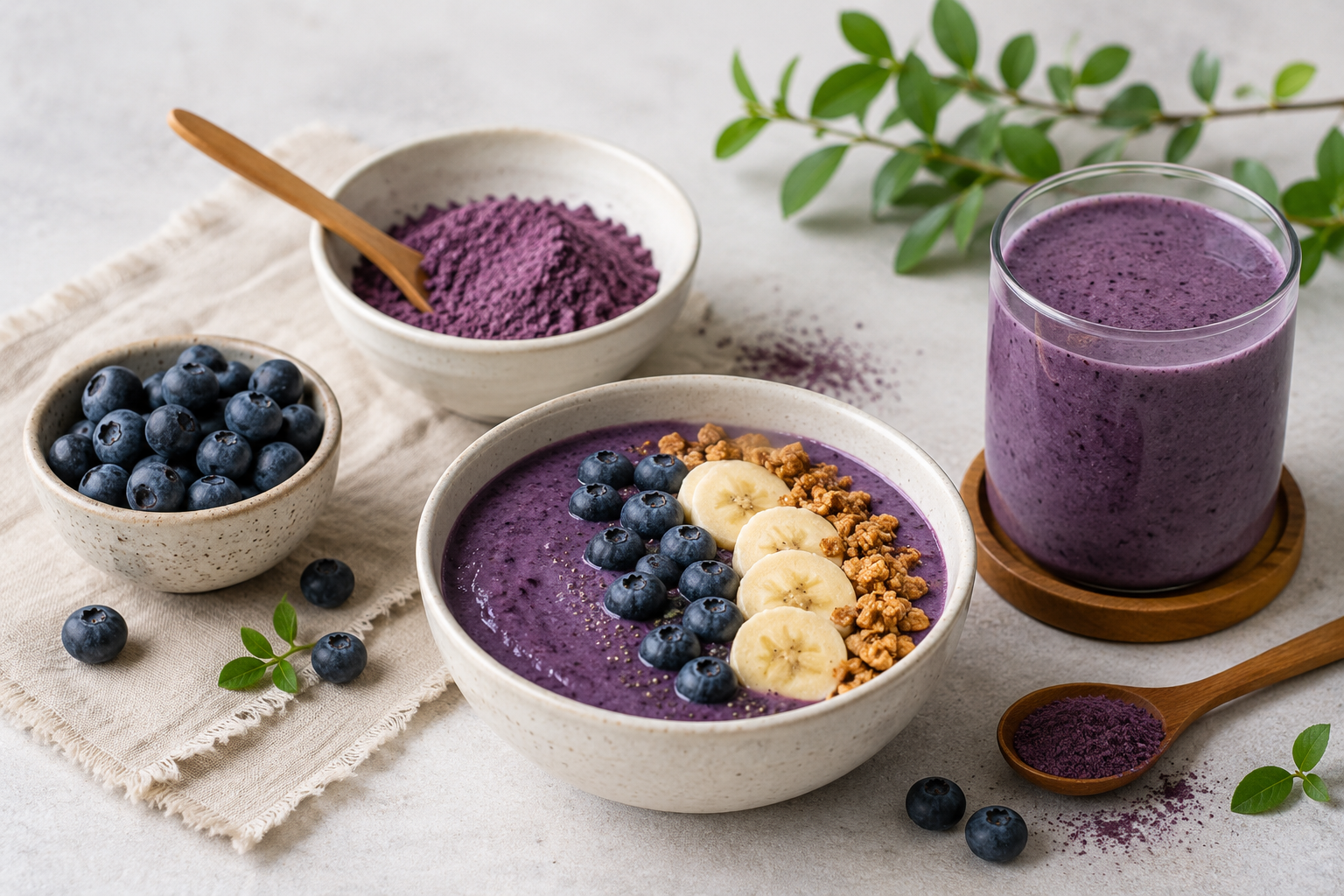
Blueberry Juice Powder vs. Whole Blueberry Powder: What’s Actually Different?
Blueberry juice powder and whole blueberry powder may begin with the same fruit, but they represent different portions of it and follow different processing paths. Learn how juice-derived blueberry...

Why Is Beet Root Powder So Red? Betalains, Natural Color & Everyday Uses
Beet root is naturally one of the most colorful vegetables in the plant world, and that color begins with the plant itself. Learn how betalain pigments give beet root powder its red-purple appearan...

What Is Mung Bean Protein? How It’s Made & How It Differs from Whole Mung Bean Powder
Mung bean protein is not simply whole mung beans ground into powder. It begins with real mung beans, but additional processing separates a protein-rich portion from the broader bean matrix, creatin...

Wheatgrass Powder vs. Wheatgrass Juice Powder: What’s the Difference?
Two products, the same plant, but two different ingredient formats. Wheatgrass powder represents more of the dried grass itself, while wheatgrass juice powder is made from juice separated from the ...

Whole Cauliflower Powder vs. Cauliflower Extract: What's Actually Different?
Cauliflower powder and cauliflower extract may begin with the same vegetable, but they are very different ingredients. Learn how drying and grinding differ from extraction, what naturally occurs in...

Why Is Purple Sweet Potato Powder So Purple? Anthocyanins, Natural Color & Everyday Uses
Purple sweet potato gets its vivid color from naturally occurring plant pigments called anthocyanins. Learn what makes those pigments distinctive, how purple sweet potato differs from ube, how its ...