Something changes for many people using GLP-1–based medications for weight management.
Breakfast that once disappeared in ten minutes may get eaten halfway and set aside. Lunch may feel like enough after a much smaller portion. Dinner may end earlier because fullness arrives sooner.
Some of this happens because GLP-1–based medications can reduce appetite and influence satiety and digestion. Some of it may also be intentional: weight loss is often one of the reasons treatment was started, and smaller portions may become part of that goal.
What gets less attention is what happens next.
When overall food intake decreases, protein intake can decrease with it. A person who previously obtained enough protein from a larger, varied diet may find that once everything gets smaller, the protein portion of the diet gets smaller too.
So a useful question is:
If you're eating less overall, are you also accidentally eating much less protein?
That is the question this article is built around.
Not how to make GLP-1 medication work harder.
Not how to lose weight as quickly as possible.
But how to keep protein from quietly disappearing from the diet when portions become smaller.
Weight Loss Isn't Only About the Number on the Scale
When people pursue significant weight loss — whether through GLP-1–based treatment, dietary changes or other approaches — attention naturally goes to the number on the scale.
That number matters.
But body weight is not the only thing changing.
Meaningful weight loss can involve reductions in both fat mass and some lean tissue. That is not unique to GLP-1 treatment; it is a broader consideration during substantial weight reduction.
The goal is not to avoid weight loss. For many people using these medications for obesity treatment, weight reduction is an important therapeutic objective.
The more useful question is how to support nutrition and physical function during that process.
Protein is one part of that picture.
Physical activity — particularly resistance or strength-based exercise — is another.
Current nutrition guidance for GLP-1–supported weight management emphasizes both adequate dietary protein and resistance training when thinking about preservation of lean tissue. Increasing protein alone is not a guarantee against muscle loss, and no single food can determine body-composition outcomes. PubMed Central (PMC)
But the practical point is straightforward:
When total food intake falls, protein deserves deliberate space in the food that remains.
Why Protein Can Become Easier to Miss on GLP-1
The problem is usually not that someone consciously decides to stop eating protein.
It is simpler than that.
When appetite falls, total food intake falls. Meals become smaller. Some foods that were once eaten regularly may no longer fit as easily into the day.
Someone may reach for foods that feel simple and manageable — fruit, toast, crackers, soup, yogurt or whatever happens to be appealing at the time.
Those foods are not inherently bad choices.
But if smaller eating occasions repeatedly contain little protein, overall protein intake can gradually decline without much attention being paid to it.
There is also the issue of repetition.
When people are not especially hungry, they often return to the same small group of familiar foods because they require less thought and preparation. If those foods contain little protein, there may be fewer opportunities across the day to make up the difference.
Protein requirements vary based on factors such as body size, age, activity level, medical conditions and treatment goals. There is no single protein target that should automatically be applied to every GLP-1 user.
But one principle is useful:
When total food intake decreases, it becomes more important to notice where protein actually appears in the foods that remain.
Where Mung Bean Protein Fits In
Mung beans are legumes and have long been used as a plant-protein food.
Mung bean protein powder is a protein-focused ingredient derived from mung beans.
For someone eating smaller portions, the relevant question is not simply whether mung beans contain protein.
It is whether the format makes plant protein easier to include in the amount of food someone actually wants to eat.
Whole legumes remain valuable foods and can absolutely remain part of a GLP-1 eating pattern.
But a protein-focused plant ingredient offers another option when someone wants to add protein without substantially increasing the volume of a meal.
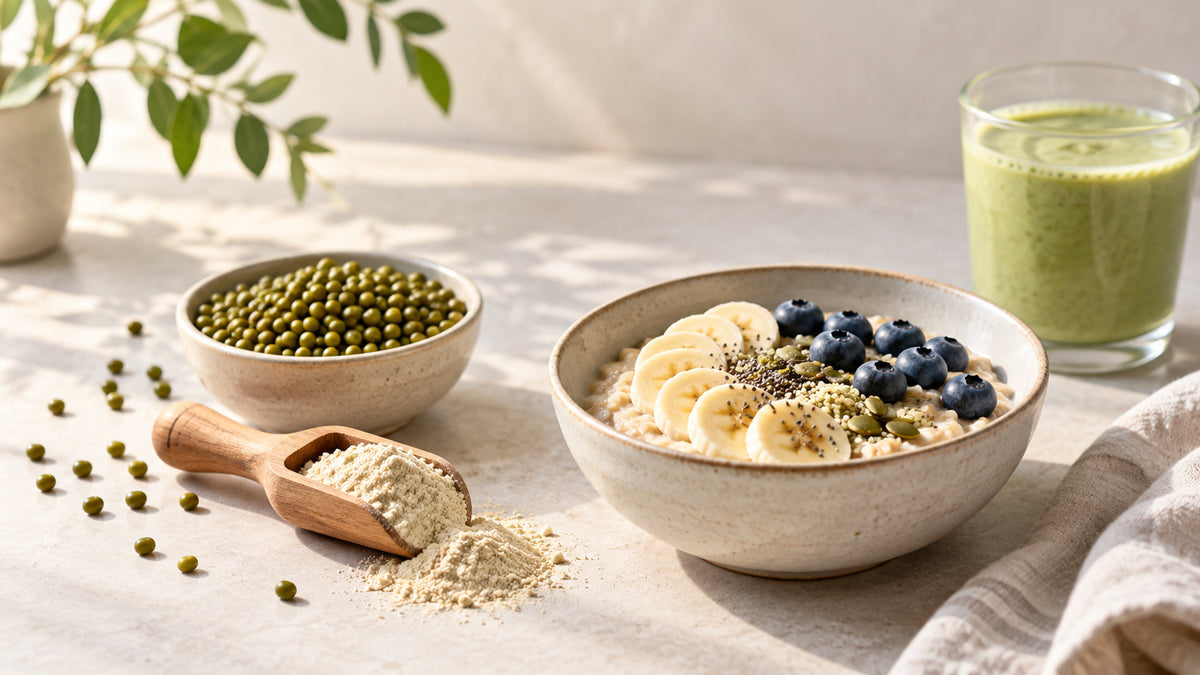
Mung Bean Protein Powder can be incorporated into foods that were already going to be eaten — for example, a smaller portion of oatmeal, yogurt or a suitable plant-based yogurt alternative, selected savory foods, or a modest blended preparation if that format is appealing.
The value isn't in adding another meal.
It is in making an existing eating occasion do more nutritional work.
That is the most useful way to think about mung bean protein in a GLP-1 context.
It doesn't create a new reason to eat. It creates another way to keep plant protein present in food you were already planning to eat.
Mung bean protein also has a relatively mild, plant-forward flavor, which can allow it to work across different food preparations without necessarily becoming the dominant flavor.
Unleash’d Organic Mung Bean Protein Powder
What If You're Vegetarian, Vegan, or Mostly Plant-Based?
For people who already eat primarily plant-based diets, the protein question has another layer.
Vegetarians, vegans and mostly plant-based eaters can absolutely obtain protein from plant foods.
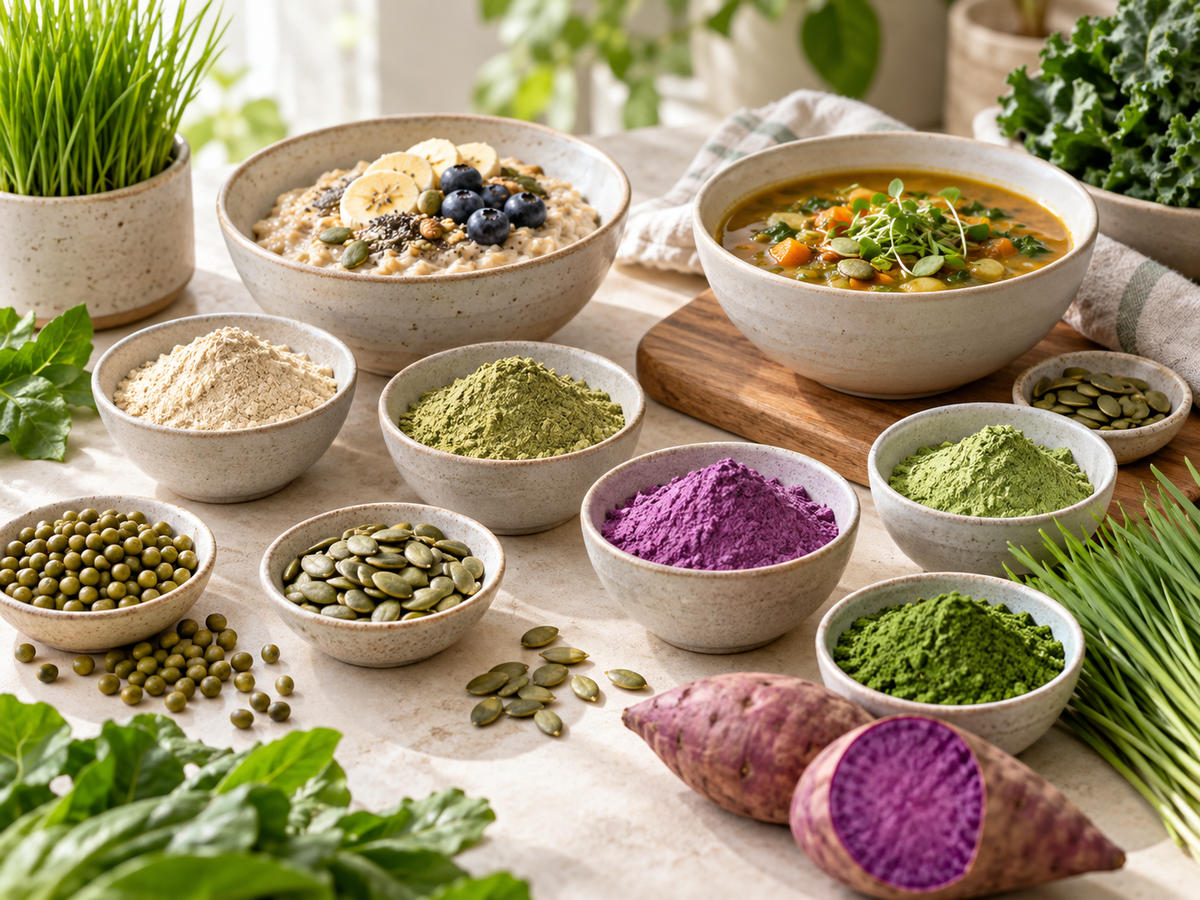
Common sources include:
- beans and lentils
- soy foods
- nuts and seeds
- whole grains
- plant-protein foods
The issue is not that plant-based diets are automatically deficient in protein.
The issue is what happens when the amount of food someone wants to eat becomes substantially smaller.
Whole plant-protein foods such as beans, lentils, tofu, seeds and grains remain excellent choices. But some of these foods may require a larger food portion than a more protein-focused ingredient to provide a comparable amount of protein.
When appetite is smaller, having both whole plant foods and more concentrated plant-protein formats can make protein planning more flexible.
That is where mung bean protein becomes particularly relevant.
A vegetarian or mostly plant-based GLP-1 user does not need to abandon the way they prefer to eat just because portions have become smaller.
Instead, a protein-focused plant ingredient can help adapt that existing eating pattern to a different appetite.
Mung bean protein does not create a new nutritional strategy for a plant-based eater. It makes an existing plant-protein strategy easier to maintain when portions are smaller.
That distinction matters.
The goal is not to replace beans, lentils, tofu, seeds or other whole plant foods.
It is simply to have another protein format available when a larger portion of those foods does not fit comfortably into a smaller eating occasion.
For a broader discussion of vegetarian protein sources and mung bean protein, see:
Existing Vegetarian / Mung Bean Protein Article
Protein Doesn't Have to Mean a Giant Shake
Protein powder is often associated with a large smoothie or meal-replacement shake.
That is one option.
It is not the only one.
For someone using GLP-1 who is already experiencing reduced appetite or earlier fullness, a large blended drink may not be especially appealing.
Protein powder can simply function as an ingredient.
Oatmeal
A smaller portion of oatmeal can serve as a base for Mung Bean Protein Powder.
The idea is not to turn breakfast into an oversized “protein bowl.”
It is to add plant protein to a food that was already going to be eaten.
Yogurt or plant-based yogurt alternatives
For people who already eat yogurt or a compatible plant-based alternative, mung bean protein can be mixed into that existing food occasion.
Again, the value is not creating another meal. It is using an existing one more intentionally.
Savory foods
Depending on the recipe and flavor combination, a mild plant protein ingredient may also fit into selected sauces, soups, grain preparations or other savory foods.
Blended drinks
For people who genuinely enjoy a drink format, a smaller blended preparation can still be useful.
But a protein shake is not a requirement for using protein powder.
The consistent principle is simple:
Don't create another full eating occasion just to use a protein powder. Add it to food you already want to eat, in an amount that fits your appetite and the product directions.
Mung Bean Protein Is Not a GLP-1 Booster
This is worth saying directly.
Mung Bean Protein Powder does not make GLP-1 medication more effective.
It does not increase the medication's appetite effects.
It does not guarantee additional weight loss.
And it is not intended to treat nausea, constipation, reflux or other medication-related symptoms.
It is a plant-protein food ingredient.
Its job is narrower — and useful:
Make it easier to keep plant protein present when appetite and portions are smaller.
That is enough.
Protein Powder Alone Isn't the Answer
Keeping protein visible in a smaller diet makes sense.
But protein should support the overall eating pattern — not become the entire eating pattern.
A diet built almost entirely around protein powder would simply create a different kind of nutritional narrowing.
Plant foods, dietary fiber, carbohydrates, fats, micronutrients and overall dietary variety still matter during weight management.
And physical activity matters too.
Resistance and strength-based exercise play a role that protein powder cannot replace. Current GLP-1 nutrition guidance specifically emphasizes that increased protein intake alone is unlikely to be enough for preservation of muscle mass without structured resistance or strength training. PubMed Central (PMC)
Mung Bean Protein Powder is a food ingredient.
It can help with the protein side of the equation.
It cannot do the work of an entire diet or an exercise program.
Protein matters, but a protein powder should support the diet — not become the diet.
Protein is also only one part of GLP-1 nutrition.
For a broader discussion of protein, plant variety and other plant-food options during GLP-1–supported weight management, see:
Weight Loss Is the Goal. Protein Still Deserves a Place.
For many adults using GLP-1–based medications specifically as part of a weight-management plan, weight loss is one of the reasons treatment started.
Eating less — whether because appetite has changed, portions are being managed intentionally, or both — can be part of that process.
But eating less does not make protein irrelevant.
If anything, fewer eating occasions make it more important to notice where protein still appears.
For someone who already eats primarily plant-based foods, that means keeping practical plant-protein sources available even when larger meals are less appealing.
Mung Bean Protein Powder offers one such option.
It can be incorporated into a smaller oatmeal portion, yogurt or plant-based alternative, selected savory foods, or a modest blended preparation without requiring another large meal.
For vegetarian, vegan and mostly plant-based GLP-1 users, its role is especially easy to understand:
It helps keep plant protein in an eating pattern that may have become smaller.
That is the entire point.
If GLP-1 helps you eat less, the goal isn't to make protein disappear along with the calories.

Leave a comment
This site is protected by hCaptcha and the hCaptcha Privacy Policy and Terms of Service apply.