Many people who begin using GLP-1–based medications for weight management notice the same broad change: portions get smaller.
Sometimes that happens because appetite is lower or fullness arrives sooner. Sometimes smaller portions are intentional because weight loss is part of the goal. Often, both are happening at once.
For weight management, eating less may be exactly the point.
But there is another change that can happen quietly alongside the reduction in calories:
the diet can become more repetitive.
When someone is eating fewer times a day, less food overall, and naturally gravitating toward familiar, easy-to-manage foods, the range of plant foods in the diet may shrink along with the portions.
It usually does not happen all at once.
It happens meal by meal: the same breakfast, the same protein source, the same few foods that feel easiest when appetite is low.
That raises a useful question:
Eating less may be part of the weight-loss plan. But does eating less also have to mean eating fewer kinds of plants?
It does not.
A smaller diet can still contain different kinds of plant foods.
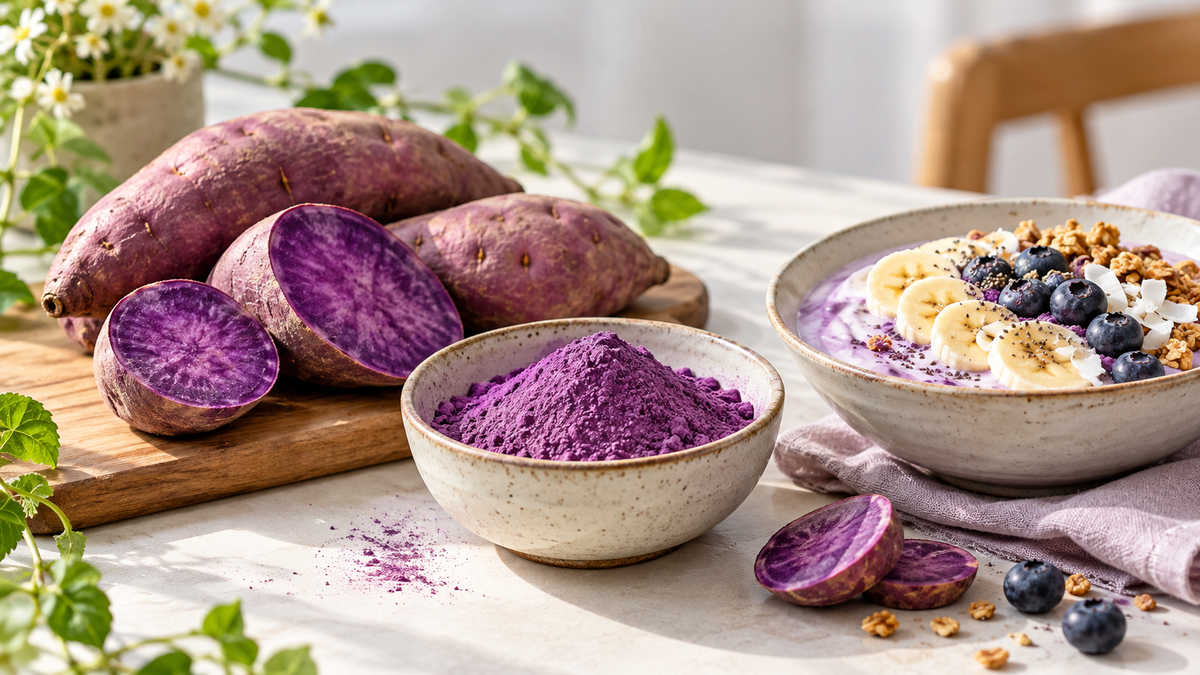
Purple Sweet Potato Powder offers one practical way to keep another plant source in the picture without creating an additional large meal.
A Smaller Diet Can Quietly Become a More Repetitive One
Reduced appetite does not only affect how much someone eats. It can also affect what they choose.
When food feels less urgent, the effort involved in variety becomes more noticeable.
Preparing another vegetable, trying a different grain, or cooking something that takes extra thought can feel less worthwhile when you are not particularly hungry.
So people often fall back on a small group of reliable foods.
That is not necessarily a problem in the short term. Familiar foods can be useful when appetite changes.
But over time, the diet can become narrower than it was before.
Different plant foods naturally contain different combinations of fiber, vitamins, minerals, and plant compounds. Legumes, root vegetables, leafy greens, seeds, berries, and grains are not nutritionally identical.
That does not mean someone needs to eat every plant category every day.
It simply means that eating less does not have to mean relying on the same two or three foods indefinitely.
This is where a powdered plant ingredient can sometimes be useful: not as a meal replacement, but as a way to bring another food source into something that was already going to be eaten.
Where Purple Sweet Potato Powder Fits In
Purple sweet potato is a purple-fleshed form of Ipomoea batatas.
It is a root vegetable, which gives it a different botanical identity from legumes, seeds, leafy greens, berries, or cereal grasses.
That difference is the reason it belongs in this conversation.
For someone eating smaller portions and returning to the same few foods repeatedly, adding a root-vegetable ingredient introduces another plant source without requiring the preparation of a whole additional dish.
Purple Sweet Potato Powder is not primarily a protein source.
Its role is different:
plant variety.
That distinction matters.
A lot of weight-loss content evaluates foods almost entirely by whether they suppress appetite, increase metabolism, or directly accelerate weight loss.
Purple Sweet Potato Powder does not need to do any of those things to have a place in a weight-management diet.
A well-constructed diet still contains food.
It still contains different plant sources.
And a root-vegetable ingredient can contribute something different from the protein ingredients that may already be getting most of the attention.
Unleash’d Organic Purple Sweet Potato Powder
Why Plant Variety Still Matters When Portions Are Smaller
Protein often receives particular attention during GLP-1–supported weight management because total food intake may fall while adequate protein remains important during weight loss.
That emphasis makes sense.
But weight-loss nutrition should not become protein-only nutrition.
Different plant foods contribute different nutritional profiles.
A legume is not nutritionally identical to a root vegetable. A seed is not the same as a leafy green. A grass-derived food ingredient is not the same as a berry.
That does not mean one category is automatically better than another.
The point is that a varied eating pattern draws from more than one type of plant food.
When appetite becomes smaller, this variety can become easier to lose simply because there are fewer meals and fewer opportunities to eat different foods.
Purple Sweet Potato Powder can play a small but clear role here:
it keeps a root-vegetable ingredient in the rotation.
That is all it needs to do.
For a broader look at how plant protein and plant variety can fit into GLP-1 weight-management nutrition, see:
What About Fiber When You're Eating Less on GLP-1?
Fiber is worth paying attention to when overall food intake decreases.
If someone is eating fewer vegetables, fruits, whole grains, legumes, and other plant foods, fiber intake may fall along with the total amount of food.
Purple sweet potato, as a whole plant food, naturally contains dietary fiber as part of its structure.
However, the amount of fiber in a finished Purple Sweet Potato Powder should be determined from the product's own Nutrition Facts rather than from generic data for fresh purple sweet potato.
That distinction matters because fresh food and processed powder are different ingredient formats.
There is also another important point:
More fiber is not automatically better. What you tolerate matters too.
Some people using GLP-1–based medications experience fullness, bloating, nausea, constipation, reflux, or other gastrointestinal discomfort.
If someone is already feeling overly full or bloated, suddenly increasing fiber substantially may make eating less comfortable.
So the goal is not “as much fiber as possible.”
The better approach is to maintain an appropriate overall eating pattern using foods and amounts that are comfortable to tolerate.
If gastrointestinal symptoms become persistent or significantly disruptive, that is a medical-management issue rather than something a plant powder is intended to treat.
What Makes Purple Sweet Potato a Different Kind of Plant?
One of the most recognizable features of purple sweet potato is its deep color.
That color comes from naturally occurring anthocyanins, a group of plant pigments also found in foods such as blueberries, blackberries, red cabbage, and black rice.
Purple-fleshed sweet potatoes are known for anthocyanin compounds related to cyanidin and peonidin, including many acylated forms.
This gives purple sweet potato a plant-compound profile that differs from more familiar berry sources.
The purpose of mentioning this in a GLP-1 article is not to claim that anthocyanins accelerate weight loss.
They do not need to.
The point is that purple sweet potato represents another plant source with its own natural composition.
That is what makes it useful in a diet that may otherwise be narrowing toward the same few foods.
One important distinction should remain clear:
information about the anthocyanin profile of purple sweet potato as a plant should not automatically be treated as measured anthocyanin data for a specific finished powder.
The exact composition of Unleash’d Organic Purple Sweet Potato Powder should be established from product-specific analytical information if specific amounts are ever claimed.
For a deeper look at purple sweet potato, anthocyanins, and how this plant differs from other purple foods, see:
Existing Purple Sweet Potato / Anthocyanins Article
Purple Sweet Potato Isn't a Weight-Loss Food — and That's Not the Point
Weight-loss conversations often put every food through the same test:
Does it suppress appetite?
Does it increase metabolism?
Does it make weight come off faster?
If the answer is no, the food can start to sound irrelevant.
But that is a very narrow way to think about eating during long-term weight management.
Someone using GLP-1 over months of treatment is still eating — just less.
The food that remains should still reflect a reasonable diet, not simply a collection of ingredients chosen because each one supposedly has a direct weight-loss effect.
Protein matters.
Overall nutritional quality matters.
Different plant foods still matter.
And food still has to be something a person actually wants to eat.
A food does not need to make you lose more weight to deserve a place in a well-constructed weight-loss diet.
Purple Sweet Potato Powder does not need to suppress appetite further, alter GLP-1 medication, or accelerate fat loss.
Its role is much simpler:
to provide another plant-derived food ingredient in a diet that may otherwise be becoming more repetitive.
That is enough.
How to Add Plant Variety Without Adding a Bigger Meal
The most useful way to think about Purple Sweet Potato Powder during GLP-1 use is not:
“Where can I fit another meal?”
It is:
“Where can I add another plant ingredient to food I'm already comfortable eating?”
Oatmeal
If oatmeal is already part of a smaller breakfast, Purple Sweet Potato Powder can be incorporated where its mild sweet-potato flavor fits.
This introduces a root-vegetable ingredient into a meal that might otherwise rely mainly on grains and familiar toppings.
Yogurt or Other Soft Foods
For people who already eat yogurt or other soft foods, Purple Sweet Potato Powder can be mixed into a suitable portion where the flavor works.
The purpose is not to increase meal size substantially.
It is simply another way to include a different plant ingredient.
Small Breakfasts or Existing Meals
If someone is already preparing a small breakfast or another simple meal, a plant powder can sometimes fit into that existing food occasion without creating a separate eating event.
That is usually more realistic than asking someone with reduced appetite to add another full meal.
Smoothies or Blended Drinks — If You Want Them
Smoothies remain an option for people who enjoy them.
But they are not required.
A smaller blended preparation may work well for some GLP-1 users, while others may find large drinks unappealing when fullness is already high.
There is no reason to force a smoothie simply because an ingredient comes in powdered form.
The underlying principle is simple:
Add variety to the food, not unnecessary volume to the meal.
Smaller Portions Don't Have to Mean a Smaller Range of Plants
Someone using GLP-1 for weight management may be successfully eating less and losing weight.
That is the goal for many people.
But a diet that gradually becomes the same few foods every day is changing in more than portion size.
It is also becoming less varied.
Purple Sweet Potato Powder has a specific role in that situation.
It is derived from purple sweet potato, a root vegetable with a botanical identity and natural plant composition different from legumes, seeds, grasses, and berries.
Purple sweet potato as a plant is also known for its distinctive anthocyanin profile, including cyanidin- and peonidin-related compounds.
The finished powder should not be assumed to contain a specific amount of those compounds without product-specific testing.
But its identity remains clear:
it is a purple sweet potato–derived food ingredient.
For a diet that is getting smaller, that can be useful simply because it helps another plant source remain present.
Weight loss can make portions smaller. It doesn't have to make the range of plants you eat smaller too.
That is the role Purple Sweet Potato Powder plays here.
Not to accelerate weight loss.
Not to enhance medication effects.
Not to claim a therapeutic function.
Simply to keep another real plant-derived food ingredient in the diet while the overall eating pattern becomes smaller and more intentional.

Leave a comment
This site is protected by hCaptcha and the hCaptcha Privacy Policy and Terms of Service apply.