Most people recognize blueberries before they ever taste them. The color gives them away — that deep blue-purple shade that feels different from almost anything else in the produce aisle.
That color is not just for looks. In many red, blue, and purple plant foods, color comes from naturally occurring plant compounds called anthocyanins. Blueberries are one of the most familiar foods connected with them, which is why they often come up in conversations about colorful eating, plant-forward diets, and everyday nutrition.
This article takes a simple look at what anthocyanins are, which foods naturally contain them, why blueberries are such an easy everyday example, and how blueberry juice powder can fit alongside fresh blueberries as a practical food ingredient.
What Are Anthocyanins?
Anthocyanins are naturally occurring plant compounds that belong to a larger family called flavonoids. In plain terms, they are pigments — compounds that help give many plant foods their red, blue, purple, and deep violet colors.
They appear in foods like blueberries, blackberries, tart cherries, red cabbage, purple sweet potatoes, pomegranates, elderberries, and mulberries. In blueberries, much of the color is concentrated in the skin, which is why the outside of the fruit is deep blue-purple while the inside is much lighter.
Anthocyanins have been widely studied in nutrition research, especially in the context of colorful plant foods and broader dietary patterns. But it is important not to treat one plant compound as a magic answer. Food is more complex than that. A better way to think about anthocyanins is this: they are one of the many naturally occurring plant compounds that make colorful fruits and vegetables interesting as part of a varied diet.
Foods That Naturally Contain Anthocyanins
Anthocyanins are not found only in blueberries. They appear across a range of red, blue, purple, and dark-colored plant foods.
Blueberries are one of the most familiar examples. They are widely available, easy to use, and naturally connected with deep blue-purple color.
Blackberries have a darker purple-black color when fully ripe and are often used in smoothies, jams, desserts, and breakfast bowls.
Purple sweet potatoes contain purple pigments throughout the flesh, making them useful in both sweet and savory foods.
Pomegranates have deep red arils and juice, adding color and tart flavor to drinks, sauces, bowls, and recipes.
Tart cherries are known for their rich red color and are commonly used in juice, dried fruit, and baking.
Elderberries are dark-colored berries often used in juices, syrups, and cooked preparations.
Mulberries are deeply colored when ripe and have a sweet, berry-like flavor.
Red cabbage is one of the easiest vegetable examples. Its color can shift depending on how it is prepared, which is one reason it is often used to explain how plant pigments behave in food.
The point is not that everyone needs to eat all of these foods. The more useful takeaway is that colorful plant foods can bring variety, flavor, visual appeal, and naturally occurring plant compounds into everyday meals.
Why Blueberries Are an Easy Everyday Choice
Among anthocyanin-containing foods, blueberries are one of the easiest to understand and use.
They are familiar. They are widely available. They fit naturally into breakfast, snacks, smoothies, yogurt, oatmeal, baking, and drinks. Compared with foods like elderberries, tart cherries, or purple sweet potatoes, blueberries require very little explanation. Most people already know what to do with them.
That matters. A food can be interesting, but if it does not fit into real meals, people are less likely to use it regularly. Blueberries work because they are simple. They are mild enough for everyday eating, colorful enough to stand out, and flexible enough to move between fresh, frozen, dried, and powdered forms.
Fresh Blueberries and Blueberry Juice Powder Serve Different Roles
Fresh blueberries are excellent as whole fruit. They are easy to snack on, scatter over yogurt, blend into smoothies, or fold into muffins when you want the texture and look of whole berries.
Blueberry juice powder serves a different purpose.
It is not trying to replace fresh blueberries. It works more like a pantry ingredient — something closer to matcha, cacao powder, or beet powder. Instead of adding whole fruit pieces, blueberry juice powder can mix into drinks and disperse through oatmeal, yogurt, smoothie bowls, batter, frosting, and other foods where whole berries may not always fit.
That difference matters in real recipes.
Fresh blueberries add moisture, texture, and pieces of fruit. That is perfect in some foods. But in other cases, you may want blueberry flavor and natural blue-purple color without fruit chunks, extra moisture, or uneven pockets of berry. Blueberry juice powder gives you another tool.
Why Choose Blueberry Juice Powder?
The answer is not only convenience. Convenience is part of it, but the stronger reason is that blueberry juice powder lets you use blueberry character in more food formats.
It can add blueberry flavor without adding whole fruit pieces. That makes it useful in drinks, yogurt, oatmeal, pancake batter, frosting, glazes, and baked goods where a smoother texture is preferred.
It can add color more evenly. Whole blueberries create spots, streaks, and pockets of fruit. Powder can create a more consistent blue-purple tone throughout a smoothie, yogurt bowl, drink, or batter.
It helps control the amount. With fresh berries, the result can change depending on ripeness, size, moisture, and season. With powder, you can start with a small amount and adjust based on the color and flavor you want.
It can reduce waste. Fresh berries are wonderful, but they do not last forever. A pouch of blueberry juice powder can stay in the pantry and be used little by little, without the pressure of finishing a carton before it softens or spoils.
It works year-round. Fresh blueberries are best in season, but blueberry juice powder gives you a consistent way to add blueberry flavor and natural color even when fresh berries are not at their best.
It can become part of a routine. Pantry ingredients are often easier to repeat. A small scoop stirred into oatmeal, yogurt, a smoothie, or a drink can become a simple habit without needing fresh berries on hand every time.
None of this means powder is better than fresh fruit. They are different forms for different uses. Fresh blueberries bring the experience of whole fruit. Blueberry juice powder brings blueberry flavor, natural color, and blueberry-derived plant compounds into foods where whole berries may not be the right fit.
Where Organic Blueberry Juice Powder Fits In
Unleash’d Organic Blueberry Juice Powder is designed as a real food ingredient, not a supplement and not a quick-fix product.
It is made to bring blueberry flavor, natural blue-purple color, and blueberry-derived naturally occurring plant compounds into everyday food. It can be kept in the pantry and used when you want blueberry character in a smoother, more flexible format.
Use it in the same spirit as other plant powders: not as a replacement for a varied diet, but as another way to make real plant ingredients easier to use.
Simple Ways to Use Blueberry Juice Powder
Start with a small amount and adjust based on the color and flavor you want.
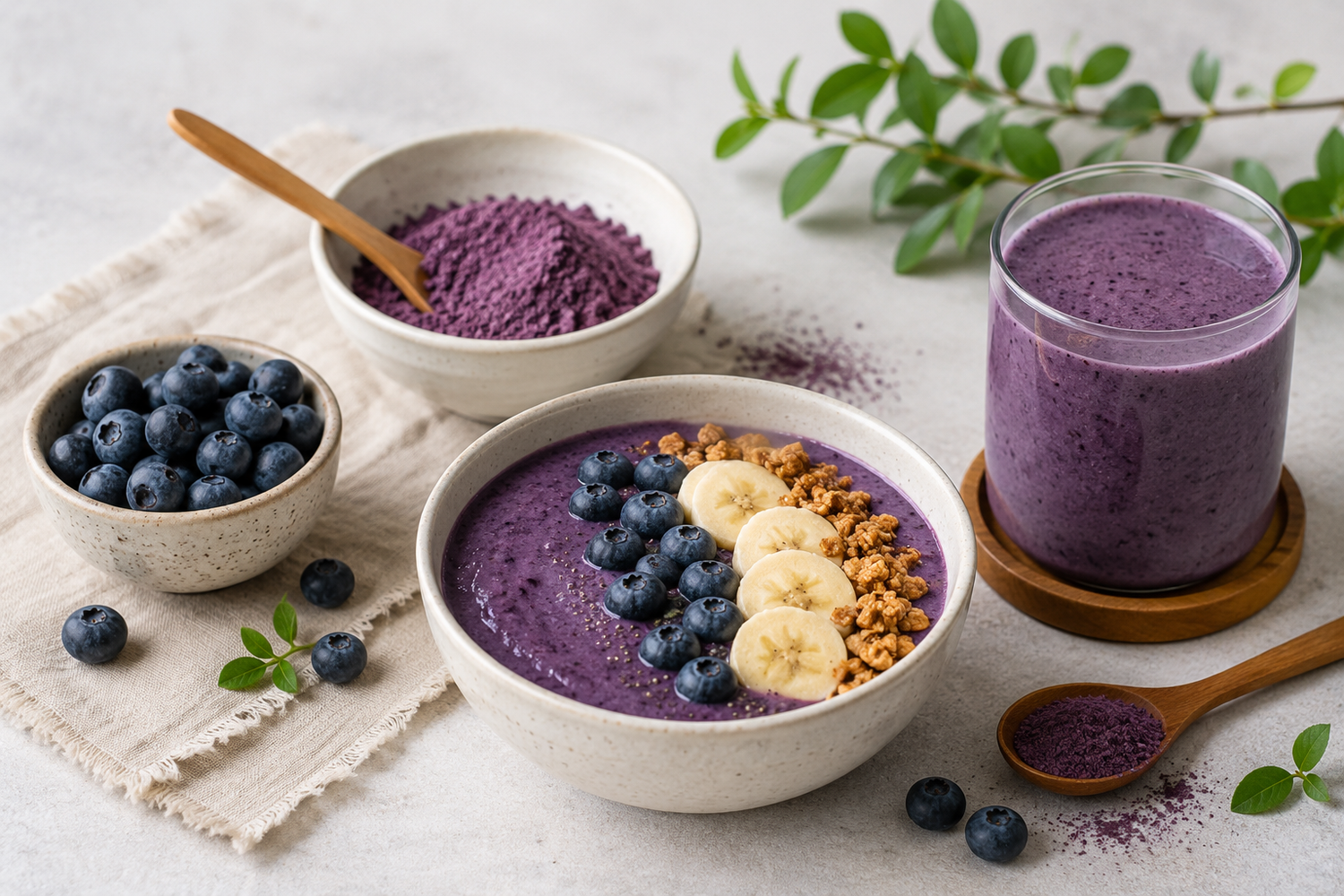
Stir it into plain yogurt for a naturally purple bowl. Add granola, sliced banana, or a drizzle of honey if you like a little sweetness.
Blend it into smoothies when you want blueberry flavor and a deeper blue-purple color without relying only on fresh or frozen berries.
Mix it into oatmeal for even color and mild berry flavor throughout the bowl.
Add it to smoothie bowls for a more consistent base color before adding toppings.
Stir it into sparkling water with lemon for a lightly flavored, naturally tinted drink.
Mix it into pancake batter when you want blueberry flavor and color spread throughout the pancakes rather than concentrated in whole fruit pockets.
Use it in muffins, quick breads, energy balls, frosting, or glazes when you want natural color and blueberry flavor without artificial dye.
Colorful Plant Foods Don’t Have to Be Complicated
Anthocyanin-rich foods are already familiar to many people: blueberries in a smoothie, red cabbage in a salad, tart cherries in a drink, or purple sweet potatoes in a recipe.
The goal is not to chase one plant compound or turn food into a science project. The goal is to notice colorful plant foods and find realistic ways to include them in meals you already enjoy.
Fresh blueberries are one easy way to do that. Blueberry juice powder is another. It gives you a pantry-friendly way to bring blueberry flavor, natural blue-purple color, and real plant character into more everyday foods — not instead of fresh fruit, but alongside it. You can also explore more fruit-based plant powders in our Fruit & Juice Powders collection.

Leave a comment
This site is protected by hCaptcha and the hCaptcha Privacy Policy and Terms of Service apply.